
Blog
Best Towels for Kids: A UK Buying Guide

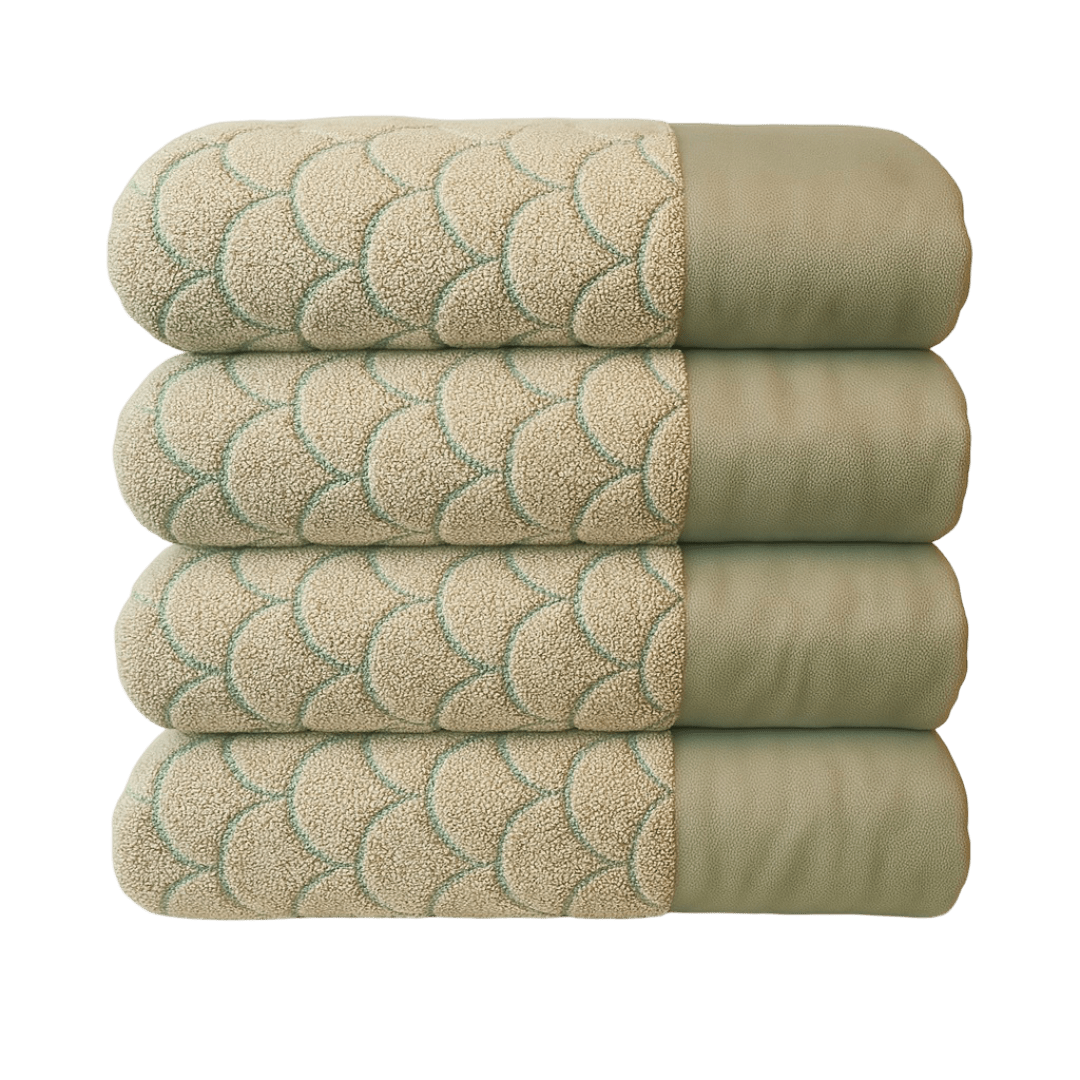
Choosing the best towels for kids is not simply a matter of buying smaller versions of adult ones. Children handle towels differently, have more sensitive skin, and generate far more laundry, so weight, size and fabric all matter in ways they do not for adults.
What makes the best towels for kids different
Three things separate a towel that works for a child from one that frustrates everybody.
Weight. A soaking 600GSM bath sheet is heavy for a six-year-old. Children struggle to wrap or hold a towel that weighs more than they can comfortably manage, which is why they end up dropping it on the floor.
Drying speed. Children’s towels get used daily, often twice, and frequently get left bunched rather than hung. A towel that dries quickly forgives that treatment. One that does not will smell within days.
Skin contact. Children’s skin is thinner and more reactive than adult skin. Rough, short-staple cotton and heavy dye loads are more likely to cause irritation, particularly for children with eczema.
What GSM suits children
For adults, 600GSM is the comfortable sweet spot. For children, the useful range sits a little lower.
| Age | Suggested GSM | Why |
|---|---|---|
| Babies and toddlers | 400 to 500 | Light, soft, dries fast between frequent baths |
| Ages 4 to 10 | 450 to 550 | Manageable weight, still properly absorbent |
| Ages 11+ | 500 to 600 | Close to adult use, can handle the weight |
Lower GSM is not lower quality. It is a deliberate trade of plushness for practicality, and for children the practicality usually wins. Our guide to what GSM means in towels explains the mechanics.
Size matters more for kids than adults
An adult bath sheet at 75 x 150 cm swamps a small child. It drags on the floor, gets stepped on and picks up everything on the bathroom tiles.
For younger children, a hand towel size at 50 x 90 cm is often the more sensible choice for drying arms, hands and faces, with a standard bath towel for after the bath. Older children from around age ten onwards manage adult sizes without difficulty.
If you are working out what fits where, our guide to towel sizes in the UK sets out every standard dimension.
Materials and sensitive skin
Stick to 100% cotton. Polyester blends feel less soft against skin and trap odour more readily, which matters when a towel is being used by a child who does not hang it up.
Look for OEKO-TEX certification where you can. It confirms the finished fabric has been tested for harmful substances, which is genuinely reassuring for children’s textiles rather than just a marketing badge.
One practical warning: fabric softener is a common trigger for irritated skin in children, and it ruins towel absorbency anyway. Skip it entirely and use a splash of white vinegar in the rinse instead.
Colour, labelling and practicality
- Give each child a colour. It stops towels being shared, which matters for hygiene, and removes an entire category of argument.
- Mid tones beat white and pastels. Children’s towels meet toothpaste, mud and paint. Darker colours hide it.
- Check colourfastness. Rub a damp white cloth on the towel. Any colour transfer means it will bleed in the wash.
- Buy more than you think. Four per child rather than three, because children’s towels get washed more often.
Are hooded towels worth it?
For babies and toddlers, yes. A hood keeps a wet head warm during the awkward window between bath and pyjamas, and that genuinely helps.
Past about age four, they get outgrown quickly and the hood becomes a nuisance rather than a help. Buying one or two for the baby years is sensible. Building an entire set around them is not.
Best towels for kids: frequently asked questions
What GSM is best for children’s towels?
Between 400 and 550 GSM for most children. That is absorbent enough to do the job while staying light enough for a child to handle and quick enough to dry between uses.
Should children have their own towels?
Yes. Sharing towels spreads skin infections and verrucas between siblings. Giving each child a distinct colour is the simplest way to enforce it.
How often should children’s towels be washed?
Every two to three uses, more often than adult towels. Children’s towels are more likely to be left damp, which is what causes smells and bacterial growth.
Are bamboo towels better for kids?
Bamboo viscose feels soft initially but is generally less durable than good cotton and loses absorbency faster under frequent washing. Well-made cotton is the more practical long-term choice.
What size towel does a child need?
A 50 x 90 cm hand towel suits toddlers and small children for everyday drying. From around age ten, a standard 70 x 130 cm bath towel or a 75 x 150 cm bath sheet is fine.
For older children and teenagers, our 100% cotton bath towels and hand towels are 600GSM pure cotton with no synthetic blend, in colours that hide everyday marks. Free UK delivery and 30-day returns.