Blog
What Makes a Good Cotton Bath Towel? (UK Guide)

A good cotton bath towel is not simply a thick one. Fibre length, weave, hem construction and finishing all decide whether it still performs after a hundred washes.
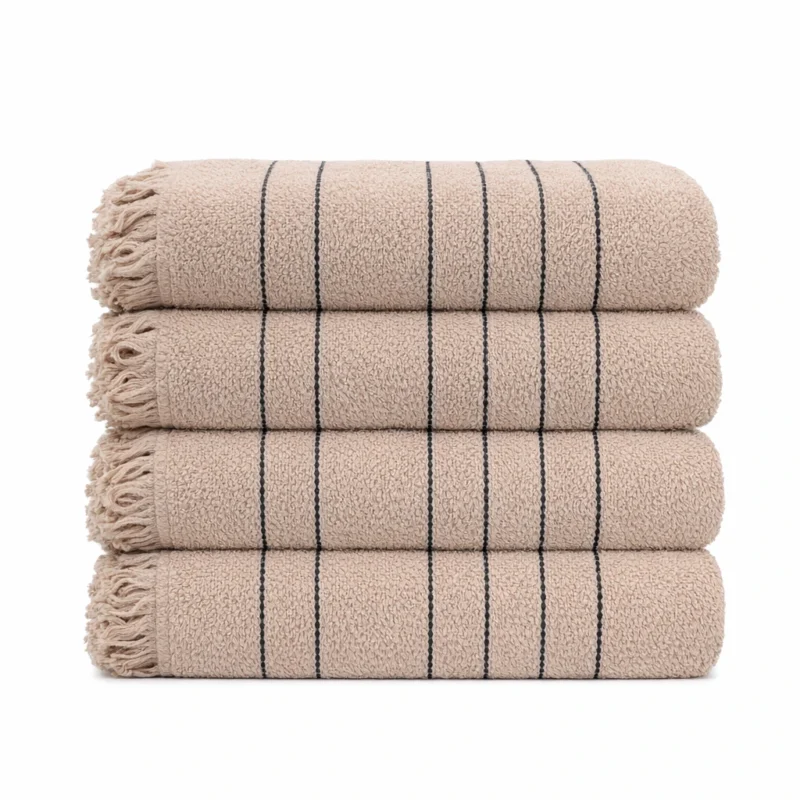
Built for softness and longevity.
How to Choose the Best Cotton Bath Towels in the UK (2026 Guide)
If you’re looking for the best cotton bath towels in the UK, understanding what actually makes a towel high-quality is essential. With so many options available—from budget to luxury hotel-style—this guide will help you choose the perfect towel for your home.
What Makes a Good Cotton Bath Towel?
The quality of a towel depends on four key factors:
- Material (Most Important)
100% cotton remains the gold standard due to its softness, durability, and excellent absorbency
- Egyptian cotton → ultra-soft, luxury feel
- Turkish cotton → quick-drying, lightweight
- Standard cotton → affordable and durable
- GSM (Grams per Square Metre)
This determines thickness and absorbency:
- 300–400 GSM → lightweight, fast drying
- 500–600 GSM → best for everyday use
- 600–800 GSM → luxury, hotel-style towels
- Weave Type
Terry cloth (looped fabric) is the most absorbent due to increased surface area - Fibre Length
Long-staple cotton fibres create softer, stronger, and more durable towels
What Size Should You Choose?
- Bath towel → standard everyday use
- Bath sheet → larger, spa-like experience
- Hand towel → quick drying
Pro Buying Tips (UK Homes)
- Choose 500–600 GSM for balance in UK weather
- Avoid synthetic blends (less absorbent)
- Always wash before first use
Final Verdict
For most UK households, the best cotton bath towel is:
✔ 100% cotton
✔ 500–700 GSM
✔ Terry weave
Quality lives in details you can inspect
Two towels can both claim 100% cotton and 600GSM and feel completely different after a year. The difference is construction, and most of it is visible if you know what to look at.
1. Fibre and yarn
Long-staple cotton spun into fine yarn produces a smooth surface with few loose fibre ends. Short-staple cotton produces a fuzzy surface that sheds lint heavily in the first several washes and thins out early.
How to check: hold the towel to the light and look along the surface. A quality towel looks smooth and even. A poor one has visible fuzz standing off the pile. Rub it briskly and see whether fibres come away on your hand.
2. Pile density and evenness
Look at the towel edge-on rather than face-on. The loops should stand upright, close together and even in height. Gaps where you can see the backing fabric mean a thin pile that will flatten quickly.
How to check: hold the towel up against a window. A dense towel blocks the light almost entirely. If you can clearly see light through the pile, it is thinner than the label suggests.
3. Hem construction
This is where cheap towels fail first, and it is the easiest thing to inspect. A good towel has a double-turned hem, meaning the fabric is folded twice before stitching, with tight, even stitches and no puckering.
How to check: run the hem between your fingers. It should feel substantial rather than thin and flat. Look for loose threads or stitching that wanders. A single-folded hem will fray within a year of regular washing.
4. The dobby border
The flat woven band near each end is not decorative. It stabilises the towel, stops the pile pulling away from the hem and helps the towel hang straight. A well-made dobby border is tightly woven and lies flat.
5. Selvedge edges
The long sides should have a finished woven selvedge rather than a cut-and-stitched edge. Selvedge edges do not unravel and keep the towel rectangular through years of washing.
6. Weight against stated GSM
Pick the towel up. A 600GSM bath sheet at 75 x 150 cm should weigh close to 675 grams. If a towel claiming high GSM feels light in the hand, the claim is unreliable.
7. Colourfastness and finishing
Poorly dyed towels bleed for many washes and fade unevenly. Reactive dyeing bonds colour to the fibre and holds up far better than cheaper surface dyeing.
How to check: rub a damp white cloth firmly against the towel. Any significant colour transfer suggests it will bleed in the wash.
8. Absorbency after the finish washes out
Almost every new towel repels water slightly because of manufacturing finish. That is normal. What matters is performance after two or three washes. A quality towel absorbs immediately on contact; a poor one still pushes water around.
A quick quality scorecard
- Smooth, low-fuzz surface, minimal shedding
- Dense pile that blocks light
- Double-turned, tightly stitched hems
- Tight flat dobby border
- Woven selvedge on long edges
- Real weight matching the stated GSM
- No colour transfer on a damp cloth
- Absorbs on contact after a few washes
A towel meeting all eight will still look good in five years. One failing three or more is a false economy however cheap it is.